

Second Story Exterior Painting
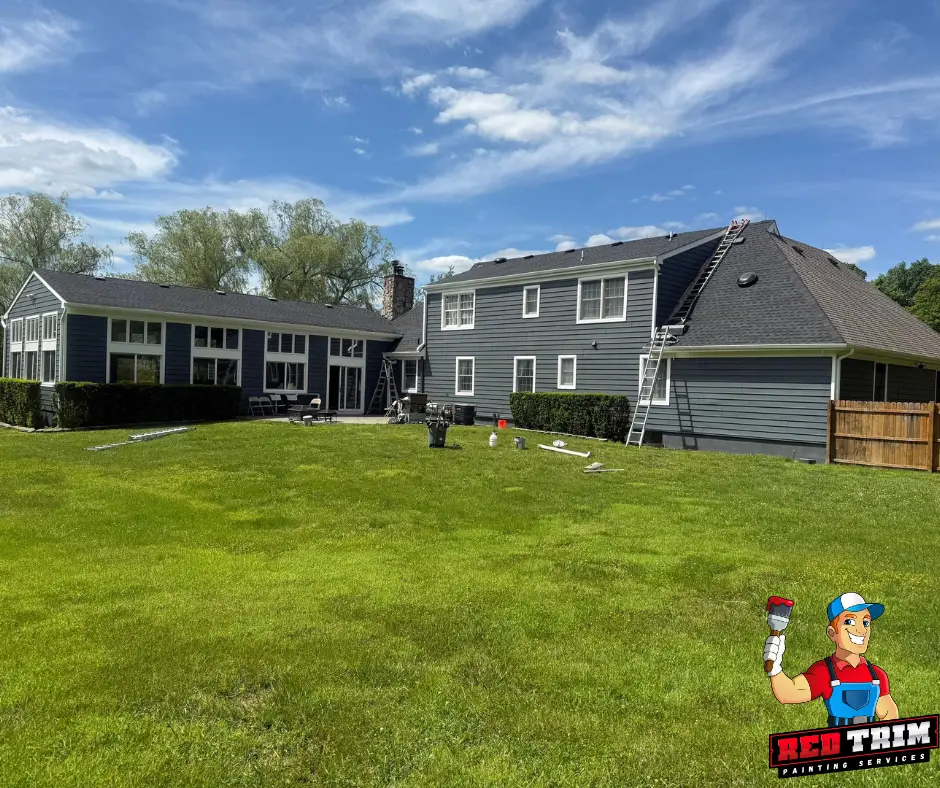
Second-Story Exterior Painting: What Homeowners Need to Know Before Hiring a Contractor
Painting the second story of a home yourself is technically possible, the same way replacing your own electrical panel is technically possible. But the risk profile changes when you’re working twelve to twenty feet off the ground, and most homeowners decide quickly that this is a job worth hiring out. Once you’ve made that call, the real question becomes: what does good second-story exterior painting actually look like, and how do you know if the contractor standing in your driveway knows what they’re doing?
This guide covers everything involved in second-story exterior painting on residential homes: the process, the materials, the costs, and the things most contractors won’t tell you unless you ask. For a broader look at how second-story work fits into a full residential exterior project, see our guide on residential exterior painting.
What Second-Story Exterior Painting Actually Involves
Second-story exterior painting refers to any exterior surface on a home that requires elevated access to reach: typically the upper siding, trim, fascia, soffits, and gable ends. On a standard colonial or two-story cape in Middlesex County, that’s 500 to 1,200 square feet of painted surface depending on the home’s footprint and architectural style.
The defining factor isn’t just height, it’s access. Every decision a contractor makes about equipment, prep method, and application strategy is shaped by the logistics of working off the ground. That’s what separates second-story work from a single-story repaint and why the cost, timeline, and skill requirements scale up.
Why Second-Story Work Is a Different Problem
Three principles drive everything about upper-story exterior painting.
First, elevated surfaces accumulate damage that’s invisible from the ground. Failed caulk behind a gutter, rot starting at a fascia corner, moisture intrusion above a dormer: none of it is obvious until someone is up there with their eyes on it. A contractor who doesn’t physically inspect the upper exterior before pricing is quoting blind.
Second, access method determines quality, not just safety. The equipment a crew uses to reach second-story surfaces directly affects how much time they can spend on any given section and the consistency of their application technique. This isn’t a logistics question, it’s a quality question.
Third, upper surfaces fail faster than lower ones. Wind-driven rain, direct sun on south and west exposures, and higher temperature cycling all hit harder at the second-story level. A paint system that holds up for ten years on first-floor siding may last six on the same material one story up if prep and product selection don’t account for that.
Access Equipment: Why It Shapes the Whole Job
The biggest variable in any second-story paint job is how the crew gets up there. Most residential contractors use one of three approaches: extension ladders, pump jacks, or scaffolding.
Extension ladders are the most common and the most misused. They work fine for spot repairs and trim work, but painting large upper siding sections from a ladder forces constant repositioning, which creates inconsistency in application pressure, overlap, and wet-edge management.
Pump jacks use vertical poles anchored at the base and roofline to support a plank system the painter stands on. They’re faster than ladders for covering wide siding runs and allow proper brush and roller technique at height. They’re the standard for most residential two-story repaints by experienced crews.
Scaffolding is the most stable option, used on homes with complex rooflines, steep grades, or unusually tall second-story walls. It’s slower to set up and more expensive, but for certain homes, particularly older colonials or center-halls with high gable peaks, it’s the right call.
When you’re getting quotes, ask the contractor specifically what access method they plan to use and why. A contractor who defaults to ladders for a full two-story repaint without explanation is worth pressing on. For a closer look at what questions to ask and what red flags to watch for when evaluating contractors, see our guide on hiring an exterior painter for second-story work.
The Process: From Inspection to Final Coat
Surface Inspection and Damage Assessment
Before any paint goes on, the contractor should walk every elevation of the upper exterior and document what they find. Second-story surfaces accumulate more damage than homeowners expect: peeling paint, failed caulk at trim joints, wood rot at fascia and soffit corners, and moisture intrusion behind siding. On a Woodbridge split-level we worked on a few years back, the upper fascia looked fine from the driveway. Once we were on pump jacks, we found two full sections of rotted board behind the gutter line that had been holding water against the sheathing for years, a scenario we run into regularly on homes in this part of New Jersey.
Pressure Washing
Upper surfaces need to be cleaned before painting. Dirt, mildew, oxidized paint, and chalking all compromise adhesion. Most residential contractors use a pressure washer at low to moderate PSI. Higher pressure on second-story wood siding or older substrates can force water behind the cladding or damage the surface. After washing, surfaces should dry for at least 24 to 48 hours before primer or paint goes on. For a full breakdown of what proper exterior prep involves, see our guide on exterior painting preparation.
Caulking and Spot Repairs
Every joint where siding meets trim, every window surround, and every butt joint in the siding runs should be inspected and re-caulked as needed. At the second-story level, these joints see more direct weather exposure than the lower half of the house. Failed caulk here allows water infiltration that can rot wood framing from the inside out before it’s ever visible from the ground.
Priming
Any bare wood, repaired areas, or surfaces where the previous paint has been removed needs primer before the topcoat. Spot priming is standard for most repaints; full prime coats are used when the surface is in poor condition or the color change is significant. On exterior wood, oil-based primers penetrate better and block tannin bleed on cedar and redwood, which is common on older New Jersey homes with cedar shake or board-and-batten upper siding. For more on primer selection by substrate, see our guide on wood painting.
Paint Application and Final Inspection
Second-story siding is most commonly brush-applied or back-rolled rather than sprayed. Spraying requires more masking and greater skill to control at height in any wind. In New Jersey, where wind conditions shift throughout the day, experienced contractors default to brush and roll on upper siding for better control and penetration. For smooth substrates like fiber cement or painted aluminum, spray, sometimes, followed by back-rolling speeds the job while still working the paint into the surface.
At the end of the job, walk the perimeter with your contractor and ask about any areas where conditions limited coverage. Upper trim and fascia details are the spots most often missed on a rushed job.
Tools and Materials
For wood siding and trim, 100% acrylic latex exterior paint in a satin or semi-gloss finish holds up best against UV and moisture cycling. Semi-gloss is preferred for trim because it sheds water better and makes the next repaint easier. For fiber cement, follow manufacturer-specified products. Voiding the substrate warranty is an avoidable problem.
Caulk should be paintable siliconized acrylic. Pure silicone caulk won’t accept paint and creates a visible seam once the topcoat goes on, a shortcut that stands out within a year.
Common Mistakes on Second-Story Paint Jobs
Skipping primer on bare wood. On upper surfaces, this is especially damaging because moisture exposure is higher and wood failure accelerates faster.
Painting in direct sun on south or west-facing upper walls. Paint applied to a hot surface dries too fast, reducing penetration and leaving a film that peels within a season.
Caulking over failed material without removing it. Old caulk that’s cracked should be removed before re-caulking. Caulking over failed material looks fine at completion and fails within a year.
Rushing dry times between coats. At height in full sun, paint can look dry in two hours. Most quality exterior paints need four to six hours of recoat time, longer in humid weather.
Missing the back side of fascia and trim edges. The underside of fascia boards and back edges of trim are consistently missed on ladder work. These are exactly the spots where water sits and rot starts.
How NJ Climate Affects Second-Story Exterior Work
New Jersey’s climate is among the hardest on exterior paint in the Northeast. The freeze-thaw cycle in late fall and early spring is the biggest threat to upper exterior surfaces. Water that penetrates a failing paint film or failed caulk joint freezes, expands, and accelerates both wood damage and paint delamination. Second-story surfaces cycle through more of these events per year than the lower half of the same house.
Summer humidity in Middlesex County, and in Monmouth, Somerset, and Union counties, creates adhesion challenges when paint is applied during high-humidity periods. Paint applied over 85% relative humidity traps moisture under the film and compromises the bond. The best painting windows in New Jersey are late spring (mid-May through June) and early fall (September through mid-October).
What It Costs: Second-Story Exterior Painting in NJ
Second-story work costs more than single-story for two reasons: access equipment takes time to set up and move, and elevated surfaces require more careful technique and longer application time per square foot. The biggest cost variables are substrate condition and access complexity. A home needing wood rot repairs, full prime coats, and scaffolding will cost more than one where existing paint is in solid condition and pump jacks get the job done.
For a full cost breakdown by home size, surface type, and scope, see our guide on the cost of exterior painting in NJ. If second-story work is part of a full repaint, our guide on complete exterior repaints covers how full-house projects are scoped and priced differently than targeted work.
Get at least three quotes. Be skeptical of any bid that comes in well below the others without explanation. Second-story work has real labor and access costs that can’t be cut without cutting somewhere else.
Maintenance and Lifecycle Planning
A quality second-story exterior paint job on a NJ home should last eight to twelve years with proper maintenance.
Annual inspection: Walk the perimeter each spring and use binoculars to check upper siding and trim joints for cracking caulk, peeling paint, or discoloration around penetrations. Catching problems early means a spot repair instead of a full repaint.
Keep gutters clear: Overflowing gutters deposit water directly onto upper siding and fascia, the fastest way to accelerate paint failure at the second-story level.
Address wood rot immediately: Any soft or discolored wood at fascia or soffit corners should be repaired before the next paint cycle. Painting over early-stage rot hides it until the damage is worse.
Touch up caulk joints every three to four years: Even good caulk shrinks and cracks over time. A tube of paintable caulk and an afternoon can add years to a paint job.
Best Practices for Hiring a Second-Story Exterior Painter
• Ask specifically about the access method and why it’s appropriate for your home
• Confirm they will inspect the upper exterior before pricing, not after
• Ask whether they check weather conditions before starting each day
• Request a written scope of work that specifies surfaces, number of coats, and product names by brand
• Walk the job at completion and ask about any limitations or areas that needed extra attention
• Don’t hire on price alone. Second-story work has real complexity and the lowest bid usually reflects that
FAQ
How long does second-story exterior painting take on a typical two-story home?
For a full two-story repaint, plan on three to five days for a professional crew depending on home size, surface condition, and weather. Homes with significant prep work, wood repairs, or full prime coats will run on the longer end. Weather days can extend the timeline, so build that into your scheduling expectations.
Does the whole house need to be painted, or can I just do the second story?
You can paint only the second story, but color match and sheen will almost never be perfect. Exterior paint fades and oxidizes at different rates on different exposures, so a repaint on just the upper half often looks noticeably different from the lower half within a season. A full repaint is usually the better investment unless the lower half was done recently.
What’s the best time of year to have my second-story exterior painted in NJ?
Late April through July and September through October are the best windows in New Jersey. Temperatures are in the right range for paint adhesion and cure, humidity is lower than summer peaks, and you avoid the freeze-thaw risk that comes with early spring and late fall.
Can second-story siding be sprayed instead of brush and rolled?
Yes, but it requires more setup time for masking and greater skill to control overspray at height, especially in wind. Most experienced NJ contractors use brush and roll or spray-and-back-roll on upper siding for better coverage control. A contractor who wants to spray everything without explaining why is worth asking more questions.
What causes paint to peel on second-story siding faster than the first floor?
Upper siding takes more direct sun, wind-driven rain, and temperature variation than the lower half of the house. Moisture cycling through the paint film from outside, and on wood substrates from the wall cavity behind, is the primary driver. Inadequate prep, wrong primer, or painting over damp wood all accelerate it.
How do I know if my second-story fascia needs to be replaced before painting?
Press on fascia boards with a screwdriver or your thumb at the ends and along the bottom edge. If the wood is soft, spongy, or crumbles, it has rot and needs to be replaced, not painted over. A painted fascia with active rot underneath will fail within a year and create a bigger repair problem.
Do I need to be home while the second-story work is being done?
Not for every day of the project. You should be present for the start-of-job walkthrough to confirm scope and at the completion walkthrough to review the work. Most contractors can complete upper exterior work day-to-day without requiring you to be there.
Will painting my second story require any permits in NJ?
Exterior painting on a residential home in New Jersey does not require a building permit. If the project involves structural repairs, replacing rotted sheathing or repairing damaged framing, those repairs may require permits depending on scope and your municipality. Your contractor should flag any work that crosses into repair territory.